Unlike an ordinary sofa pillow, which may flatten or sink beneath you, a meditation cushion is usually firm enough to create a stable sitting surface.
Common fillings include:
- buckwheat hulls
- kapok
- cotton batting
- foam
- combinations of natural and synthetic materials
Meditation cushions also come in several shapes, including round, crescent, V-shaped, rectangular, and low-profile designs.
Their purpose isn’t to force you into perfect posture.
A good cushion should simply help you find a position that feels stable enough to maintain without constantly adjusting your body.
Do You Need a Meditation Cushion?
No.
Meditation can be practiced without any special equipment.
Mayo Clinic advises choosing a comfortable position and notes that meditation can be practiced while sitting, lying down, walking, or in other positions.
A meditation cushion may nevertheless be useful if you enjoy floor meditation but notice that:
- your hips feel tight
- your knees remain much higher than your hips
- your pelvis tends to roll backward
- your lower back rounds while sitting
- you become uncomfortable quickly
- an ordinary pillow collapses underneath you
- you want a stable, dedicated place for meditation
Some NHS mindfulness guidance specifically recommends raising the pelvis with a meditation cushion or bench when practicing floor-based meditation and suggests positioning the knees close to the ground rather than substantially above the pelvis.
That doesn’t mean everybody needs the same cushion height.
Bodies differ.
The goal is to find a setup that works for yours.
What Are the Benefits of a Meditation Cushion?
A meditation cushion cannot make you more mindful by itself.
Its benefits are practical.
It Raises Your Hips Off the Floor
The main function of most meditation cushions is elevation.
When your hips are slightly raised, some cross-legged positions may feel easier to maintain.
This can also give the pelvis more room to settle naturally rather than rolling backward into a slouched position.
It Creates a More Stable Sitting Surface
An ordinary bed pillow is usually designed for softness.
A meditation cushion is generally firmer.
That firmness can create a more predictable base beneath your body, particularly during longer meditation sessions.
It May Make Floor Meditation More Comfortable
If you enjoy sitting close to the floor but dislike sitting directly on it, a cushion provides a middle ground.
You still get the simplicity of floor meditation without placing your full weight directly onto a hard surface.
It Can Help Establish a Meditation Ritual
A meditation cushion can also become part of the environment surrounding your practice.
You might leave it in a quiet corner beside:
- a journal
- a plant
- headphones
- a meditation timer
- a soft blanket
Over time, simply sitting there can become a small signal that it is time to slow down.
Types of Meditation Cushions
Search for a meditation cushion online and you’ll encounter several shapes.
They aren’t simply aesthetic variations.
Different shapes give your legs and pelvis different amounts of space.
1. Round Zafu Meditation Cushion
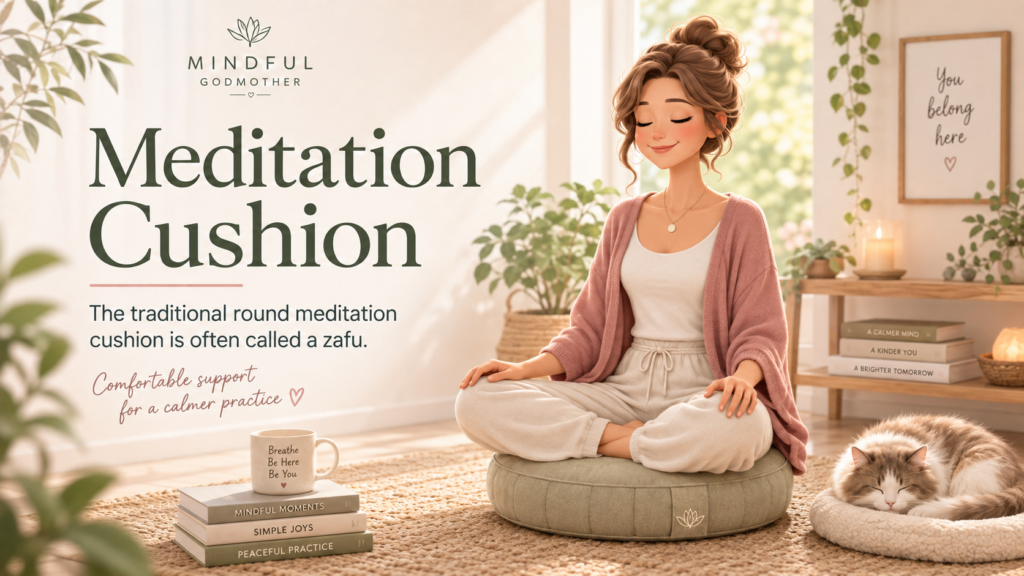
The round zafu is the classic meditation cushion.
It usually measures around 4–6 inches high and provides a firm elevated seat.
Round cushions are versatile and work with several common cross-legged positions.
Best for: beginners who aren’t sure which style they prefer.
2. Crescent Meditation Cushion
A crescent cushion curves around the back and sides of your sitting position.
The open front gives the legs more room than a completely round cushion.
Retrospec, for example, describes its crescent version as providing additional hip and leg support compared with its round cushion.
Best for: people who like cross-legged sitting but want more space around the thighs.
3. V-Shaped Meditation Cushion
A V-shaped cushion creates two supportive wings underneath the thighs.
This style may appeal to people who dislike having their legs pressed against a large round cushion.
Best for: meditators who want more thigh support and an open front.
4. Rectangular Meditation Cushion
Rectangular cushions resemble compact bolsters.
They can work for cross-legged sitting, kneeling, yoga, or other floor-based practices.
They are often particularly convenient if you want one cushion to serve multiple purposes.
5. Zabuton
A zabuton is different from a zafu.
Rather than primarily raising the pelvis, it is a broad, relatively flat meditation mat placed underneath your meditation cushion.
Its purpose is to provide cushioning for your knees, ankles, and feet against a hard floor.
Many people use:
zafu on top + zabuton underneath
rather than choosing one or the other.
Buckwheat vs. Kapok vs. Foam Meditation Cushions
The filling can make as much difference as the shape.
Buckwheat Hulls
Buckwheat is one of the most common modern meditation-cushion fillings.
The small hulls shift around your body while remaining relatively firm.
Another advantage is adjustability: many buckwheat cushions have an inner zipper so you can remove some filling if the cushion feels too high or firm.
All three cushions recommended later in this guide use buckwheat.
Good for: people who prefer firm, moldable support.
Consider: buckwheat cushions tend to be heavier than foam or kapok alternatives.
Kapok
Kapok is a lightweight natural fiber traditionally used in cushions.
It tends to feel firmer than a household pillow but less granular than buckwheat.
Good for: people who prefer a lighter cushion with a more traditional stuffed feel.
Consider: you usually cannot fine-tune kapok height as easily as loose buckwheat.
Foam
Foam meditation cushions can feel softer and lighter.
Some people enjoy that cushioning, especially for shorter sessions.
Good for: people who dislike very firm seating.
Consider: different foams compress differently, so softness doesn’t necessarily mean better long-term support.
Meditation Cushion vs. Meditation Chair: Which Is Better?
One of the most useful questions to ask isn’t:
Which meditation cushion should I buy?
It is:
Should I use a meditation cushion at all?
A meditation cushion and a meditation chair solve slightly different problems.
Choose a meditation cushion if:
- you enjoy sitting on the floor
- you comfortably bend your knees
- you don’t need a backrest
- you want something small and portable
- you prefer a traditional floor-based setup
- storage space is limited
Choose a meditation chair if:
- floor sitting is uncomfortable
- you want back support
- getting down to or up from the floor is difficult
- your knees or hips strongly dislike cross-legged sitting
- you prefer a more substantial sitting surface
Harvard Health specifically notes that meditation may be practiced on a floor cushion, mat, or blanket, but recommends a chair when floor sitting is uncomfortable or difficult to get up from.
Meditation Cushion vs. Meditation Chair at a Glance
| Feature | Meditation Cushion | Meditation Chair |
|---|---|---|
| Floor-based | Yes | Sometimes |
| Back support | Usually no | Often |
| Portable | Excellent | Moderate |
| Storage | Minimal | Requires more space |
| Cross-legged sitting | Excellent | Depends on width |
| Traditional feel | Strong | Less traditional |
| Best for limited mobility | Not always | Often better |
| Typical cost | Lower | Higher |
There is no prize for choosing the more traditional option.
If a chair helps you meditate comfortably for 15 minutes while a cushion leaves you struggling after three, the chair is probably the more useful meditation tool for you.
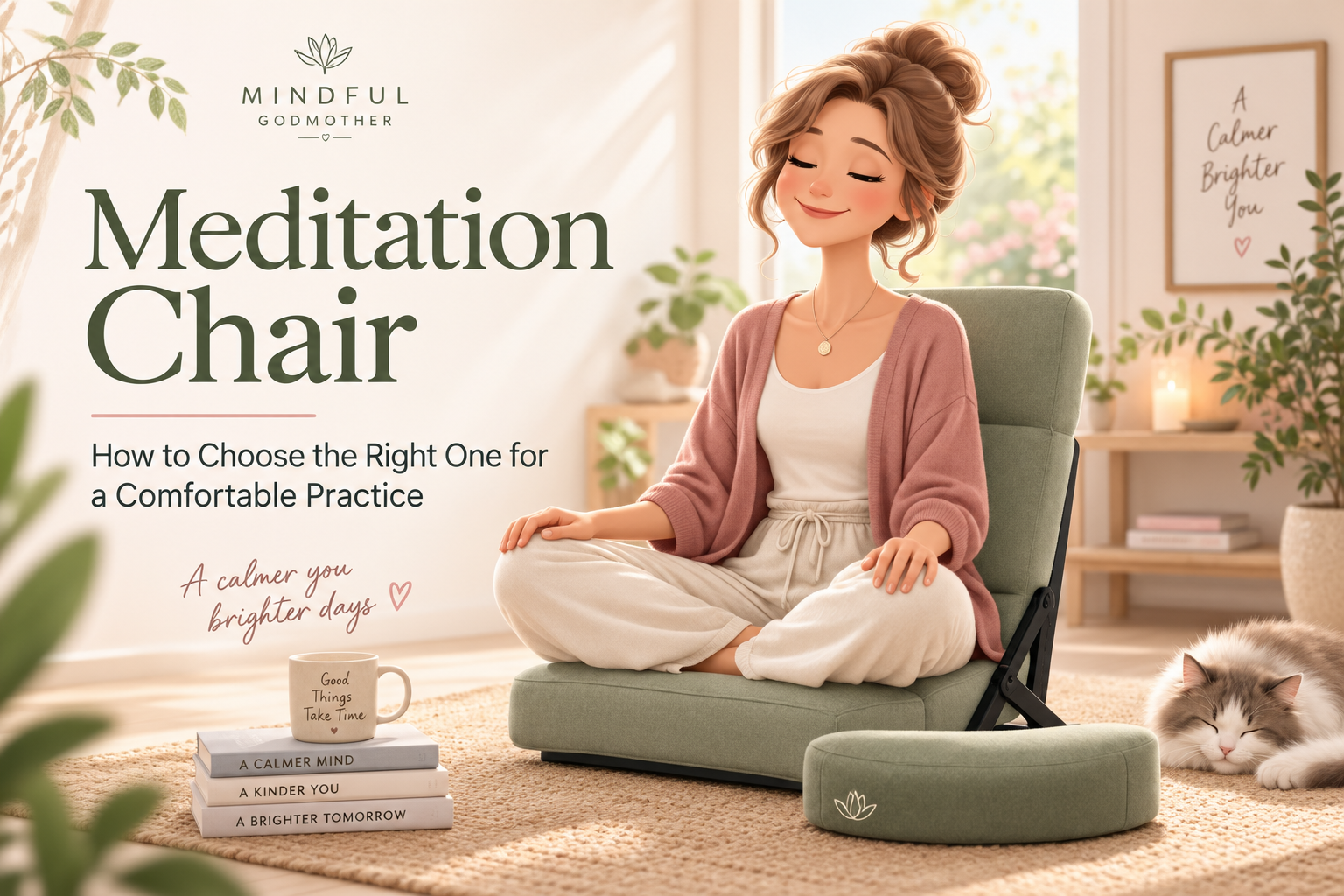
Internal link opportunity: Meditation Chair: How to Choose the Right One for a Comfortable Practice
Top 3 Meditation Cushions Worth Considering
If you’ve decided that a meditation cushion suits your practice, these three options represent three slightly different buying priorities.
I would describe these as meditation cushions worth considering, rather than claiming any cushion is universally best for every body.
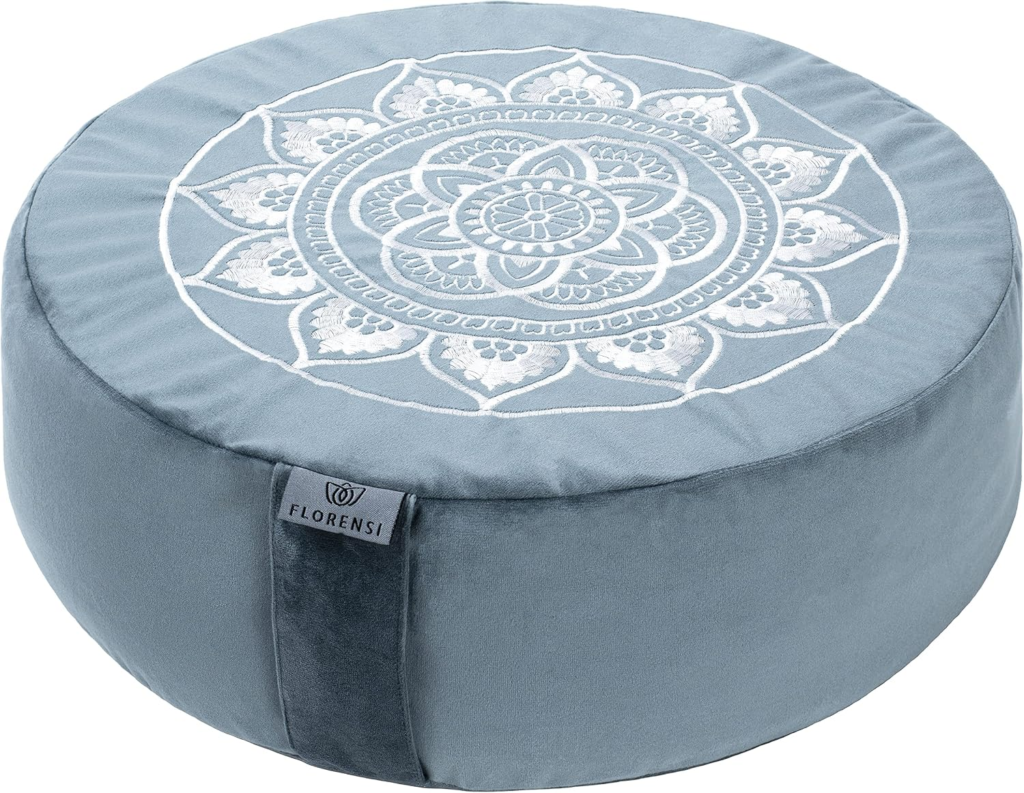
1. Florensi Meditation Cushion — Best Overall for Beginners
Florensi Meditation Cushion
The Florensi Meditation Cushion is the one I would start with for a typical beginner who wants a traditional round zafu.
The current model is about 16 inches across and 5 inches high and combines natural buckwheat hulls with a layer of foam padding. The buckwheat level can be adjusted through an inner zipper, and the outer velvet cover is removable and washable. A carrying handle makes it easier to move around the house or take to a meditation class.
Amazon currently indexes Florensi’s round buckwheat meditation cushion as well.
Best for: beginners and everyday home meditation.
Why I like it: The 16-inch round seat is relatively generous, the filling is adjustable, and it has the familiar traditional zafu shape.
Something to consider: Buckwheat feels noticeably firmer than a sofa cushion. If you strongly prefer soft seating, this may take a little adjustment.
Mindful Godmother pick: Best overall for beginners.
2. Retrospec Sedona Zafu — Best Value and Shape Choice
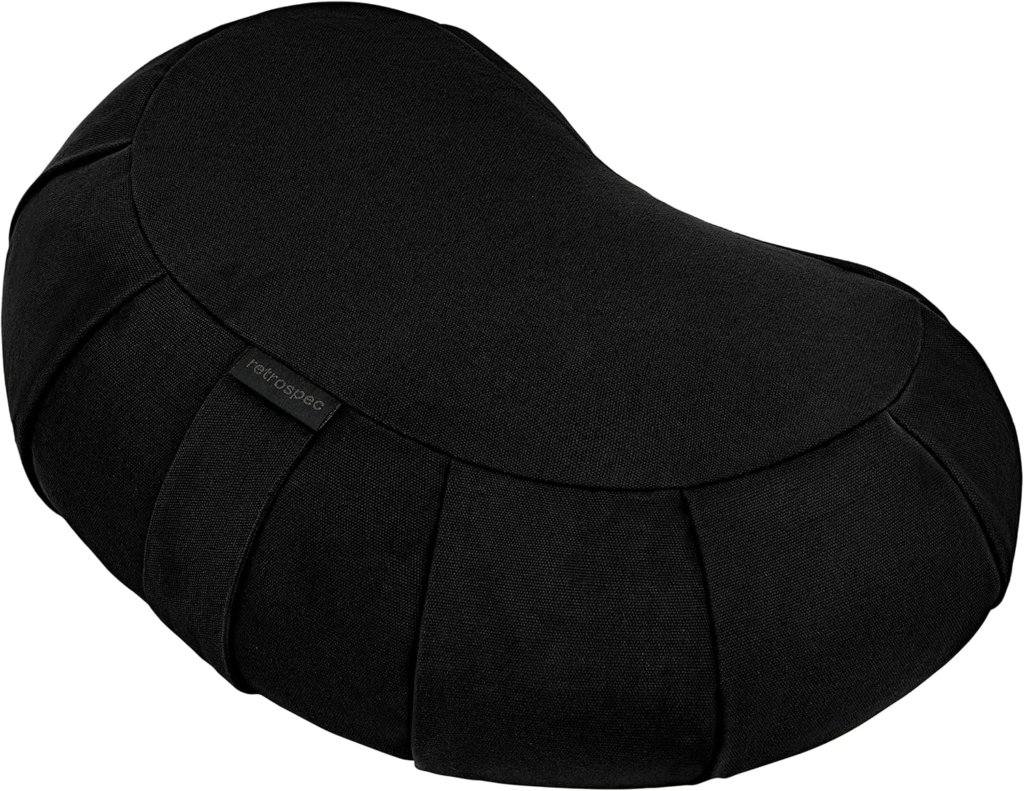
Retrospec Sedona Zafu Meditation Cushion
The Retrospec Sedona stands out because it comes in both round and crescent shapes.
The round model measures approximately 13 × 13 × 4.5 inches, while the crescent version measures about 17 × 10.5 × 5.5 inches.
Both use sustainably sourced buckwheat, have removable machine-washable cotton covers, adjustable fill, and built-in carrying handles.
Amazon also currently indexes the Sedona Zafu.
Best for: budget-conscious beginners and anyone choosing between round and crescent shapes.
Why I like it: Being able to choose the shape is genuinely useful. The crescent version may be especially attractive if a traditional round zafu feels bulky around your thighs.
Something to consider: The round version is smaller than the Florensi cushion, so compare measurements rather than choosing from photos alone.
Mindful Godmother pick: Best value and most flexible shape choice.
3. Hugger Mugger Zafu Meditation Cushion — Best Premium Pick
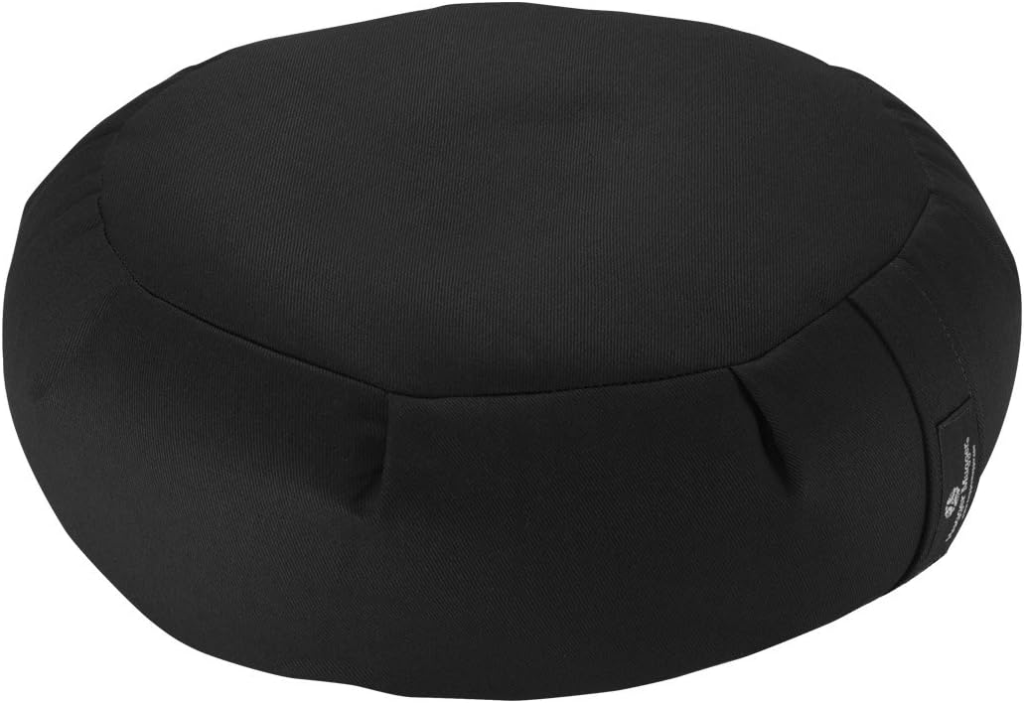
Hugger Mugger Zafu Meditation Cushion
For someone who expects to meditate regularly and wants a more traditional premium option, the Hugger Mugger Zafu is worth considering.
It measures approximately 15 × 15 × 5 inches, uses a cotton cover and organic buckwheat hulls, and includes a zipper so the amount of fill can be adjusted. Hugger Mugger says its zafu is handmade in the USA and includes a carrying handle.
Hugger Mugger’s Zafu is also currently surfaced through Amazon’s U.S. search results.
Best for: regular meditators looking for a substantial traditional zafu.
Why I like it: Adjustable organic buckwheat filling, established meditation-focused construction, and a straightforward traditional shape.
Something to consider: It typically sits at the more premium end of this group.
Mindful Godmother pick: Best premium meditation cushion.
Quick Comparison
| Cushion | Best For | Shape | Filling | Approx. Height |
|---|---|---|---|---|
| Florensi | Most beginners | Round | Buckwheat + foam | 5″ |
| Retrospec Sedona | Value / shape choice | Round or crescent | Buckwheat | 4.5–5.5″ |
| Hugger Mugger Zafu | Regular practice | Round | Organic buckwheat | 5″ |
- If you’re buying your first meditation cushion, I would start by looking at Florensi.
- If you’re unsure whether you want a round or crescent cushion, Retrospec gives you the most useful choice.
- If you already meditate regularly and want a traditional, substantial cushion, Hugger Mugger is the premium option I’d consider.
How to Choose the Best Meditation Cushion for You
Instead of looking for a universal “best meditation cushion,” consider these six things.
1. Cushion Height
Height is one of the most important measurements.
A taller cushion raises your pelvis farther from the floor.
That may feel helpful if your hips are tight, but too much height can also feel awkward.
Shorter, more flexible people may prefer a lower cushion, while someone who struggles to bring their knees toward the floor may appreciate additional elevation.
Adjustable buckwheat cushions are useful because you can experiment.
2. Cushion Width
Don’t ignore diameter.
A wider cushion gives you more sitting area but takes up more floor space.
Compare:
- your body size
- your preferred sitting position
- the manufacturer’s dimensions
A cushion can look much larger—or smaller—in Amazon photography than it really is.
3. Shape
If you’re unsure, a round zafu is the safest starting point.
Consider a crescent or V-shaped design if you want more open space in front of the pelvis and thighs.
4. Firmness
A meditation cushion should usually feel more supportive than a decorative pillow.
But “firm” is subjective.
If possible, choose adjustable filling so you can remove material rather than being stuck with one height and density.
5. Washability
Meditation equipment tends to stay on the floor.
A removable cover makes cleaning much easier.
Check whether the cover is:
- machine washable
- hand washable
- spot-clean only
Don’t assume all covers use the same care instructions.
6. Portability
If your cushion stays in one meditation corner, weight won’t matter much.
If you take it to classes, retreats, or yoga sessions, look for:
- a carrying handle
- manageable weight
- compact dimensions
Buckwheat cushions can be surprisingly heavy.
How to Sit on a Meditation Cushion
You don’t need to sit in full lotus.
In fact, many meditators never do.
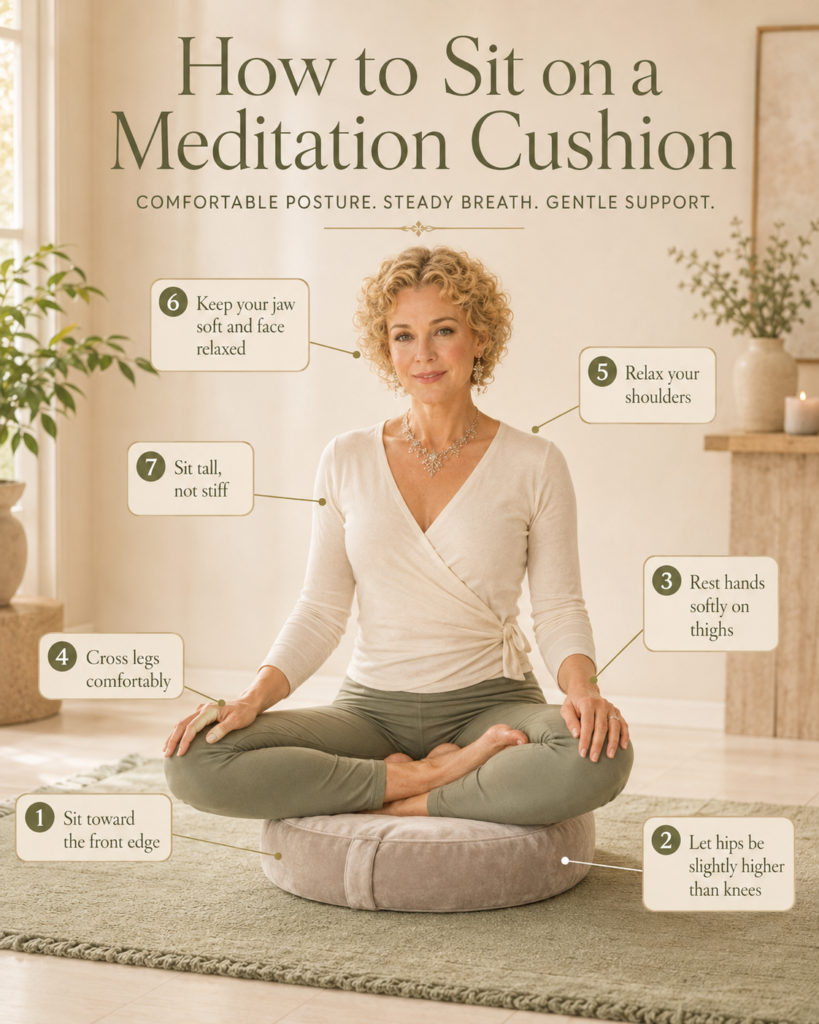
Start by placing your cushion on a stable floor or meditation mat.
Sit toward the front half rather than directly in the center.
This allows your pelvis to tilt slightly forward.
Then arrange your legs in a comfortable position.
Possible options include:
- easy cross-legged position
- Burmese position
- half lotus
- kneeling
Let your knees move naturally toward the floor without forcing them downward.
Rest your hands on your thighs or lap.
Allow your shoulders to soften.
Imagine your spine becoming gently taller rather than rigidly straight.
Harvard’s breath meditation guidance describes the basic goal as finding an alert, comfortable position on a chair, floor cushion, or bench.
Then bring your attention to your breathing.
That’s enough.
Should Your Knees Be Lower Than Your Hips?
You may often hear that your knees “must” be lower than your hips.
It’s better to treat this as a useful positioning idea rather than an absolute rule.
Some floor-meditation guidance recommends raising the pelvis so the thighs slope toward the floor and the knees aren’t substantially above the pelvis.
But anatomy, flexibility, injuries, and comfort differ.
Never force your knees downward to achieve a photograph-perfect meditation posture.
If the position hurts, adjust it.
What If Your Knees Don’t Reach the Floor?
This is common.
You can try:
- adding a little more height beneath your hips
- using an adjustable cushion with additional fill
- placing folded blankets beneath your knees
- changing to a crescent cushion
- trying a kneeling posture
- switching to a meditation chair
Meditation should not become a flexibility test.
Can You Use a Regular Pillow Instead?
Yes, especially while you’re figuring out whether floor meditation suits you.
Fold a firm blanket or use a relatively dense pillow.
If that feels comfortable, there’s no requirement to upgrade.
A dedicated meditation cushion becomes more useful when an ordinary pillow:
- sinks too much
- moves around
- doesn’t provide enough height
- becomes uncomfortable during longer sessions
Try what you already own before purchasing something new.
That’s often the easiest way to discover what your body actually needs.
How Long Should You Sit on a Meditation Cushion?
There is no minimum session length required to make meditation count.
Start with something manageable.
That might be:
5 minutes.
As the position becomes familiar, you might gradually practice for 10, 15, or 20 minutes.
If your body is telling you that it needs to move, listen.
Persistent pain and numbness aren’t achievements.
If sitting repeatedly causes significant pain or other physical symptoms, consider getting appropriate medical or physiotherapy advice rather than assuming a different cushion will solve the problem.
How to Create a Simple Meditation Space
Once you have a comfortable seat, resist the temptation to turn meditation into an interior-design project.
You don’t need a dedicated room.
A simple corner might include:
- your meditation cushion
- a rug or zabuton
- one small plant
- a blanket
- soft light
- headphones
- a journal
If mornings are when you have a little more quiet, you could use your cushion for a short morning meditation before the rest of the day begins.
A peaceful meditation space isn’t valuable because it looks beautiful.
It’s valuable because you return to it.
Frequently Asked Questions About Meditation Cushions
What is a meditation cushion called?
The traditional round meditation cushion is commonly called a zafu. A zabuton is the larger flat mat often placed underneath it to cushion the knees and ankles.
Is a meditation cushion worth it?
It can be if you enjoy floor meditation and find that additional height and firmness make sitting more comfortable. But you don’t need one to meditate.
What is the best meditation cushion for beginners?
A medium-height, adjustable round zafu is a versatile starting point because you can experiment with both position and firmness. Among the three options discussed here, Florensi is my general beginner pick.
Is buckwheat good for a meditation cushion?
Buckwheat is popular because the hulls shift around the sitter while remaining relatively firm. Many buckwheat cushions also allow you to remove filling to adjust the height.
How high should a meditation cushion be?
There isn’t one ideal height for everyone.
Many common zafus are around 4–6 inches high, but your preferred height depends on flexibility, anatomy, sitting position, and comfort.
Is a round or crescent meditation cushion better?
A round zafu is versatile and traditional.
A crescent cushion gives the thighs more open space and may feel more comfortable for some cross-legged positions.
Neither is automatically better.
Is a meditation cushion better than a chair?
Only if floor sitting suits you.
A chair may be the better option if you need back support, dislike cross-legged sitting, or have difficulty getting to and from the floor.
Can meditation cushions help with back pain?
A cushion may help you find a more comfortable sitting setup, but it should not be treated as a treatment for back pain.
If you have ongoing or significant back pain, seek guidance from an appropriate healthcare professional.
A Meditation Cushion Should Make the Practice Simpler
The purpose of a meditation cushion isn’t to create the perfect posture.
It isn’t to make your meditation space look more authentic.
And it certainly isn’t something you need before you’re allowed to begin.
Its job is much simpler:
to give you a comfortable, stable place to sit.
- If a round zafu helps you settle, use one.
- If a crescent feels better, use that.
- If an ordinary folded blanket works perfectly, keep the blanket.
And if your body feels much happier in a meditation chair, choose the chair.
Your meditation practice doesn’t become more meaningful because you’re sitting closer to the floor.
What matters is creating a position in which you can soften unnecessary effort, notice your breathing, and return your attention when it wanders.
Find the support that helps you do that.
Then sit.
And begin.